Denver's elevation of 5,280 feet reduces oxygen density, which directly impacts natural gas combustion. Standard sea-level rules of thumb cause contractor errors, leading to oversized systems that overheat heat…
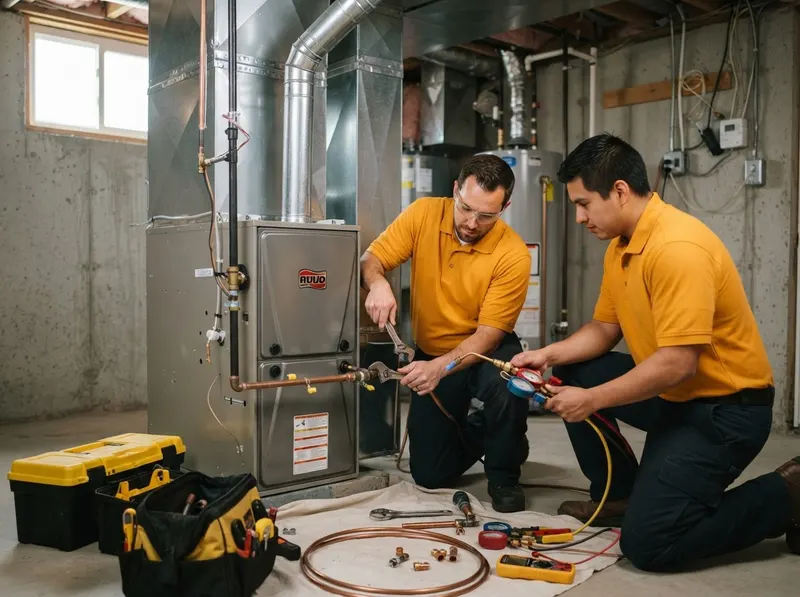
Denver's elevation of 5,280 feet reduces oxygen density, which directly impacts natural gas combustion. Standard sea-level rules of thumb cause contractor errors, leading to oversized systems that overheat heat exchangers or undersized systems that run continuously during Arctic cold fronts. Technicians calculate heat load based on physical ceiling heights, duct friction, and exterior masonry common in neighborhoods like Washington Park, Baker, and Congress Park. Installing equipment with altitude-adjusted manifold pressure prevents premature component failure, unburned fuel waste, and unsafe carbon monoxide venting.
Selecting a complete replacement over a major repair is recommended when a unit exceeds 15 years of operating life or exhibits a cracked heat exchanger. Older residential structures in Capitol Hill, Highland, and Five Points frequently feature legacy gravity ductwork or modified chases that restrict airflow. Proper sizing reconciles modern ECM blower motors with legacy distribution trunks, stabilizing temperatures between basement levels and upper floors. For properties in Central Park or Sloan's Lake with tight modern building envelopes, mechanical calculations ensure adequate fresh air intake without pulling cold drafts into living areas.
Every job gets a firm, written price after a free on-site visit.
Tell us about your furnace replacement and sizing job in Denver and we'll send a clear, written quote — usually the same day.
 Enterprise HVAC Solutions