When property owners evaluate an HVAC Denver contractor, understanding high-altitude combustion physics, mountain atmospheric density, and strict municipal building codes is critical. Denver sits at 5,280 feet above sea level, where atmospheric pressure drops to roughly 12.2 pounds per square inch compared to 14.7 pounds per square inch at coastal elevations.

An HVAC company in Denver is a licensed mechanical contracting service that delivers altitude-calibrated heating, cooling, ventilation, and combustion diagnostics to ensure reliable thermal performance across Front Range residential and commercial structures.
Every service reflects the same meticulous attention to detail — whether it's a single job or a larger hvac project across Denver.
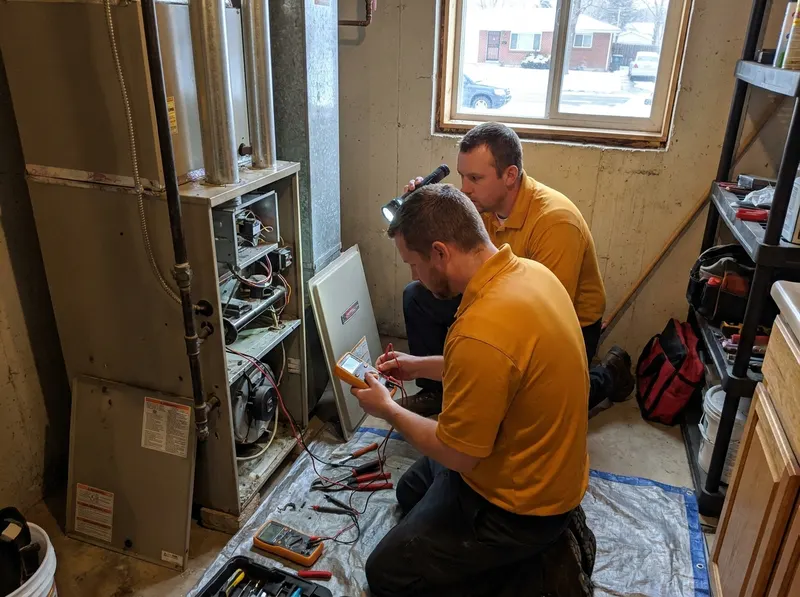
Emergency furnace repair addresses sudden system lockouts, broken silicon nitride igniters, failed flame rectification sensors, restricted draft inducers, and tripped limit switches during severe Front Range sub-zero weather events. When a heating system shuts down unexpectedly during a winter freeze, technicians run structured diagnostic workflows starting with incoming line voltage, thermostat calling signals, and secondary control board error codes. At Denver's elevated altitude, technicians carry digital manometers to test manifold gas pressure on both natural gas and liquid propane units, verifying that fuel delivery precisely matches reduced atmospheric oxygen levels. Flue draft conditions are evaluated using calibrated combustion analyzers to detect dangerous flue gas spillage, backdrafting, or heat exchanger micro-fractures that could leak carbon monoxide into residential living spaces. Crews carry universal replacement draft inducer assemblies, multi-fit hot surface igniters, 24-volt transformers, and solid-state control modules on service trucks to complete repairs on the initial visit whenever feasible, restoring safe and reliable baseline heat to the home.
View details →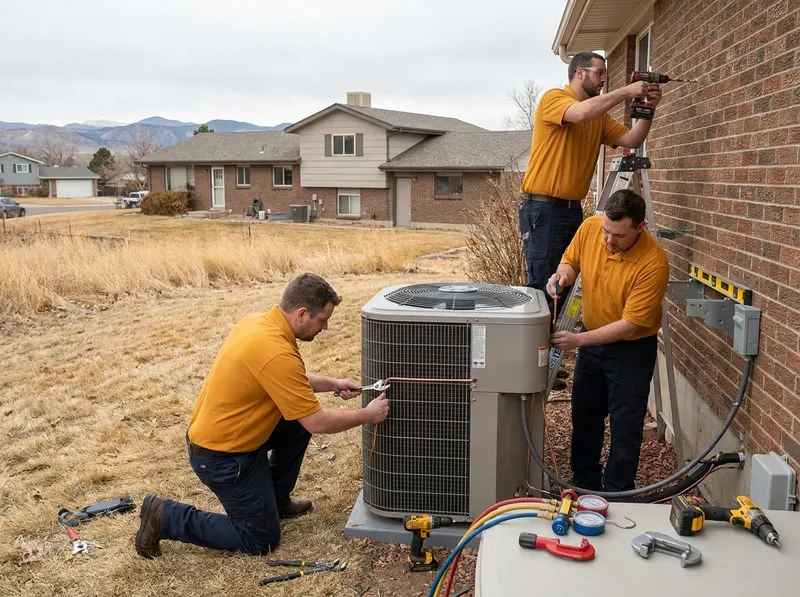
Central air conditioner installation delivers engineered, high-efficiency split-system cooling matched to Denver's intense solar radiation, low relative humidity, and thin atmospheric density. Because low-density air carries less mass per cubic foot, cooling systems operating in the Front Range must move slightly higher volumetric airflow rates across the indoor evaporator coil to achieve proper sensible heat reduction without freezing the refrigeration circuit. Every installation begins with a rigorous ACCA Manual J load calculation that accounts for wall orientation, window glazing, ceiling insulation R-values, and high-elevation solar heat gain rather than relying on crude square-footage estimates. Mechanical teams mount the outdoor condensing unit on isolated vibration pads, pull deep vacuum levels below 500 microns on nitrogen-brazed copper refrigerant lines, and fine-tune thermal expansion valves (TXV) to maintain exact target superheat and subcooling parameters. The result is a quiet, code-compliant central cooling system running at 15.2 to 20+ SEER2 efficiency that maintains indoor comfort during mid-summer heatwaves.
View details →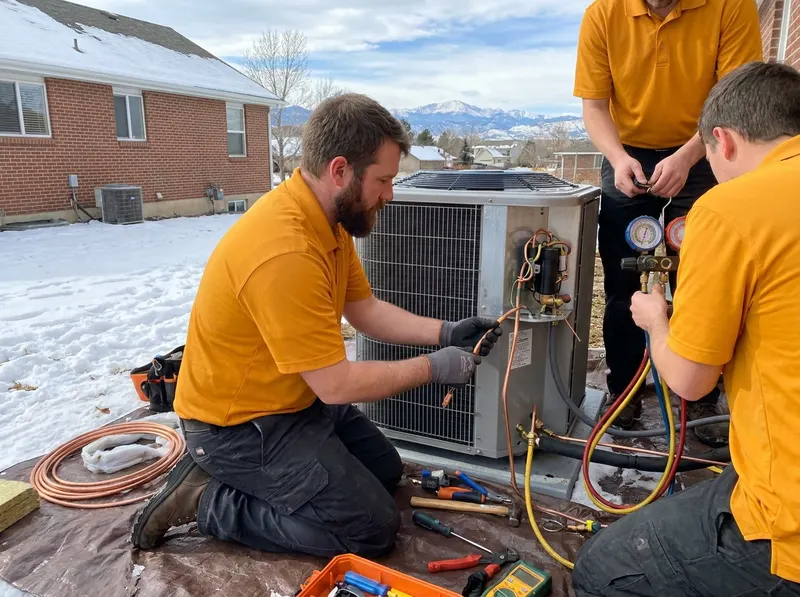
Cold-climate heat pump conversion transitions properties from conventional fossil-fuel burning equipment to fully electric, variable-speed inverter technology capable of delivering dependable heating throughout harsh Colorado winters. Unlike standard baseline heat pumps that lose thermal output when outdoor temperatures drop below freezing, cold-climate inverter systems utilize advanced vapor-injection scroll compressors and intelligent electronic expansion valves to extract ambient thermal energy from outdoor air down to minus 15 degrees Fahrenheit. Technicians evaluate existing electrical panel capacities, sizing dedicated 240-volt circuits, disconnect boxes, and whole-home dynamic load calculations to meet Denver County electrical requirements. Indoor air handlers are paired with multi-stage auxiliary electric resistance backup banks to ensure continuous indoor heating during historic polar vortex weather dips. Transitioning to a high-efficiency heat pump allows property owners to qualify for valuable regional utility rebates through Xcel Energy while reducing onsite greenhouse gas emissions.
View details →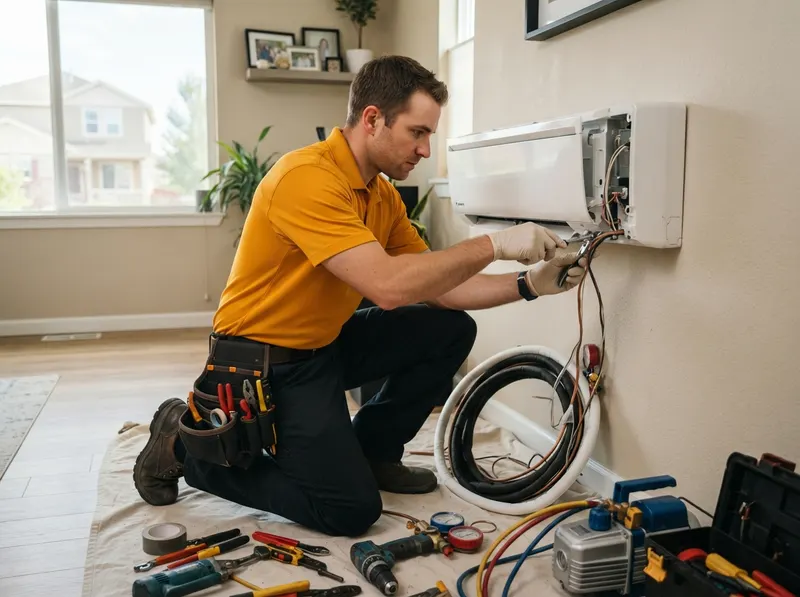
Ductless mini-split installation delivers targeted, multi-zone heating and cooling for historic structures, finished basement spaces, pop-top additions, and light commercial suites lacking central duct networks. By connecting an outdoor variable-speed inverter heat pump to one or more independent indoor air-handling units via small, non-invasive three-inch wall penetrations containing insulated refrigerant tubing and power wiring, ductless systems provide precise temperature control room by room. Technicians position indoor evaporators—available as wall-mounted consoles, floor-mounted units, or recessed ceiling cassettes—to optimize room air throw and convective circulation without creating drafts. Each indoor unit functions on its own dedicated programmable thermostat or wireless remote, allowing occupants to heat or cool occupied rooms while eliminating the 20 to 30 percent distribution energy losses typical of unsealed sheet metal duct systems running through unconditioned Denver attics or crawlspaces.
View details →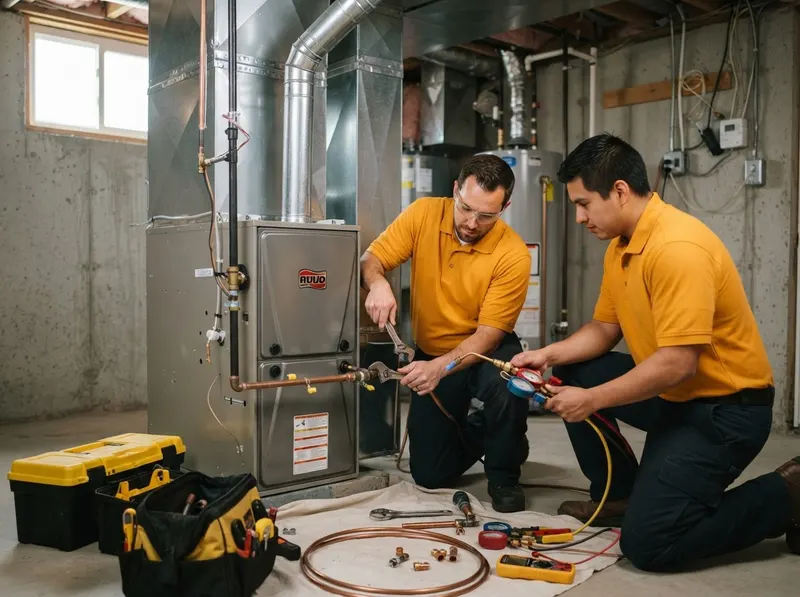
Furnace replacement and sizing updates outdated, low-efficiency heating systems with modern 80 to 98 percent AFUE sealed-combustion, condensing gas furnaces engineered for high-altitude longevity. In Denver's thin atmosphere, replacement furnaces must be derated by approximately 4 percent per 1,000 feet of elevation above sea level, typically requiring high-altitude burner orifice swaps, custom pressure switch calibrations, and manifold pressure adjustments to prevent incomplete combustion and soot formation. Technicians carefully remove the old furnace, inspect and adapt existing sheet metal supply and return plenums using smooth transition transitions, and install direct-vent two-pipe PVC or polypropylene combustion air intake and flue exhaust piping through exterior building walls. Every replacement includes modern magnetic filter racks, integrated safety pan float switches, condensate trap neutralizers, and a complete startup combustion analysis to verify safe fuel burning and thermal efficiency.
View details →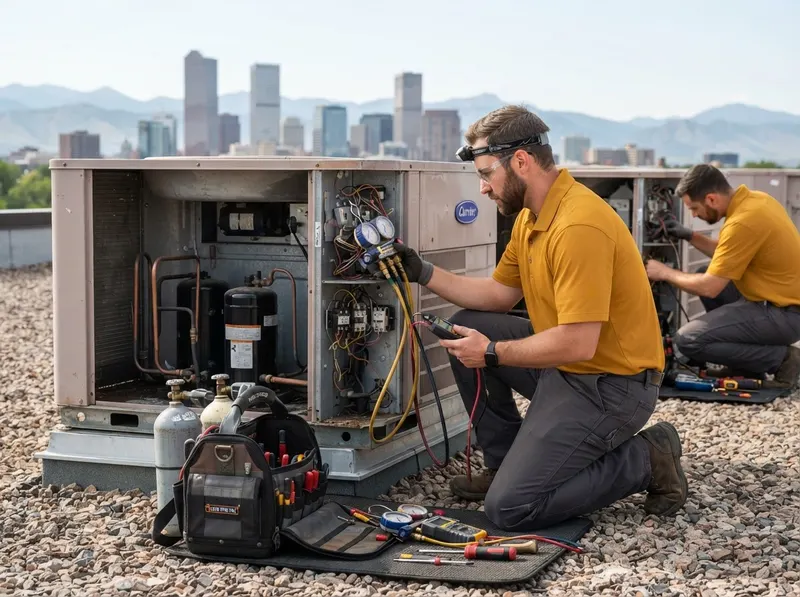
Commercial HVAC rooftop diagnostics provides specialized mechanical troubleshooting, economizer analysis, and operational maintenance for packaged rooftop units (RTUs) across Denver retail strips, office parks, and commercial facilities. Commercial technicians service 3-ton to 25-ton packaged systems, troubleshooting multi-stage Copeland scroll compressors, variable-frequency drives (VFDs), belt-driven centrifugal supply blowers, and high-limit burner assemblies. Denver's wide diurnal temperature shifts create substantial opportunities for free-cooling energy savings, making commercial economizer enthalpy sensor calibration and motorized damper actuator testing essential. Technicians use precision digital gauges and airflow capture hoods to balance static duct pressures, verify proper ventilation exchange rates per ASHRAE standards, diagnose phase-loss or electrical contactor pitting, and guarantee commercial buildings maintain consistent indoor comfort and indoor air quality standards year-round.
View details →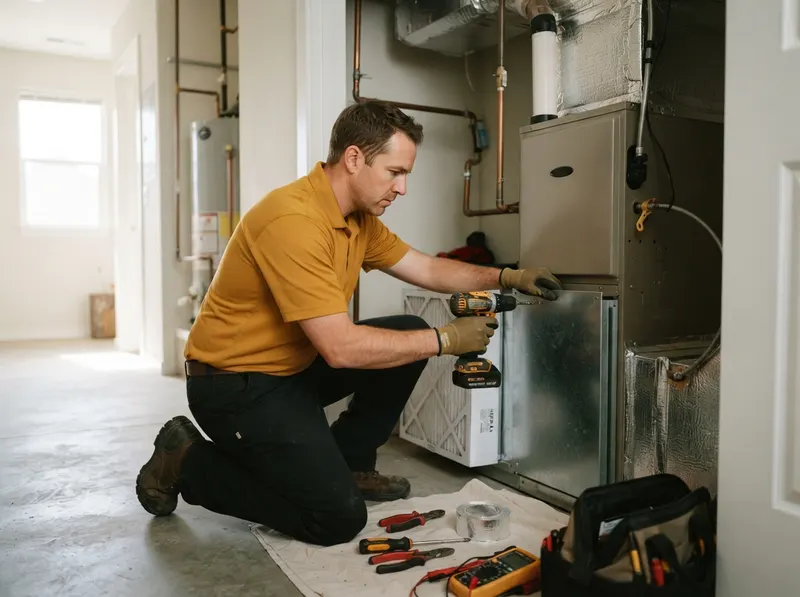
Indoor air quality and whole-home filtration systems combat severe Front Range dry winter atmospheric conditions, fine particulate dust, spring pollen surges, and intense late-summer wildfire smoke events across the Denver metropolitan basin. Technicians install inline deep-pleated MERV 13 and MERV 16 whole-home media air cleaners directly into return air drop plenums to capture microscopic particulate matter down to 0.3 microns without creating excessive static pressure drop against the central furnace blower motor. To address Colorado's exceptionally low indoor winter humidity levels—which frequently drop below 15 percent and cause dry respiratory tracts, static electricity, and shrinking hardwood flooring—crews integrate flow-through bypass or powered evaporative steam humidifiers directly into the duct network. In tightly sealed modern structures, balanced heat recovery ventilators (HRVs) and energy recovery ventilators (ERVs) are installed to exhaust stale indoor air and bring in continuous, filtered fresh outdoor air while recovering thermal energy.
View details →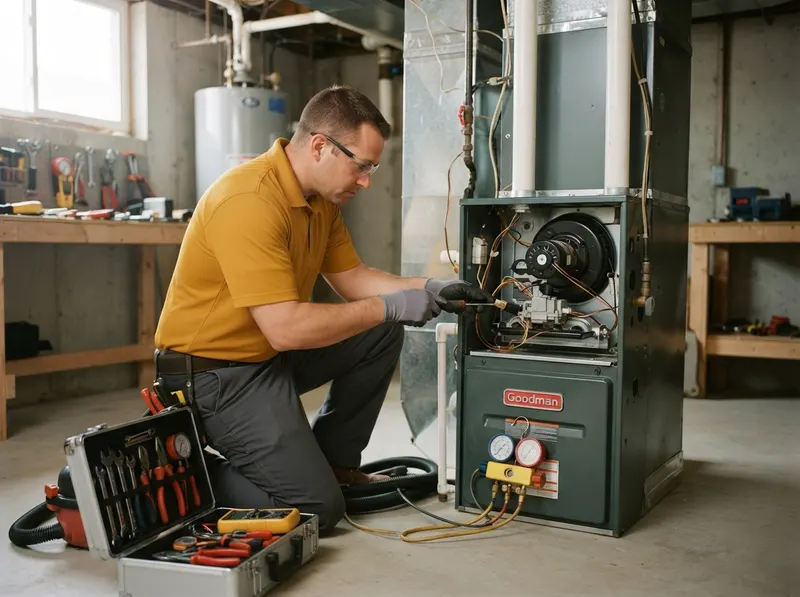
Preventative seasonal maintenance delivers comprehensive 28-point mechanical and safety tune-ups for heating and air conditioning systems prior to Denver's extreme seasonal weather shifts. For autumn furnace inspections, technicians inspect primary and secondary heat exchangers using high-definition borescope cameras to check for thermal stress cracks, chemically clean flame sensors, test igniter resistance tolerances, vacuum out burner ports, clean blower wheel assemblies, and measure total external static pressure across duct systems. For spring cooling maintenance, technicians chemically wash outdoor condenser coils to remove accumulated cottonwood seeds and environmental dust, inspect motor run capacitors with microfarad testers, torque all high-voltage electrical connections, verify crankcase heater functionality, and charge refrigerant circuits to exact factory specifications. Regular maintenance extends equipment operating life, preserves factory warranty protections, and prevents mid-season breakdowns.
View details →An HVAC company in Denver is a licensed mechanical contracting service that delivers altitude-calibrated heating, cooling, ventilation, and combustion diagnostics to ensure reliable thermal performance across Front Range residential and commercial structures.
You get a firm, itemized quote for your hvac before any work begins — no surprises, no pressure.
Careful prep, tidy work, and a full cleanup when we are done. We treat your home and belongings like our own.
The same trusted, background-checked team from the first call to the final check.
Navigating heating and cooling investments in Denver requires balancing thermal output, seasonal energy efficiency ratings, high-elevation airflow adjustments, and long-term operating costs. If your primary concern is maintaining unwavering, immediate high-temperature heat during abrupt polar vortex cold snaps in an older brick bungalow with standard ductwork, choose a high-efficiency 96 percent AFUE two-stage or modulating natural gas furnace. If your objective is whole-home decarbonization, lowering your carbon footprint, and capturing substantial local utility rebates through Xcel Energy and the Colorado Clean Heat Plan, choose an inverter-driven, cold-climate air-source heat pump rated to operate efficiently down to minus 15 degrees Fahrenheit. The trade-off between these two pathways involves upfront equipment and electrical infrastructure investment: a variable-capacity cold-climate heat pump generally requires a higher upfront financial commitment and often necessitates an electrical service panel upgrade to 200 amps, whereas a replacement gas furnace leverages existing natural gas supply lines and 120-volt circuits but leaves the property exposed to fluctuating fossil fuel commodity pricing. If you own a multi-story historic home in neighborhoods like Baker, Capitol Hill, or Congress Park that utilizes gravity heating, cast-iron radiators, or boiler systems without pre-existing sheet metal ductwork, choose a multi-zone ductless mini-split heat pump system. This architecture places individual, whisper-quiet wall or floor-mounted fan coils directly inside distinct living zones, bypassing the destructive and expensive process of tearing into historic lath-and-plaster walls to run bulky sheet metal risers. The operational trade-off of a ductless layout is aesthetic: modern indoor air-handling units remain visible on interior perimeter walls, and each zone requires its own localized condensate drainage line and dedicated refrigeration piping route back to the outdoor branch box or multi-port inverter condenser. If your property already features functional, properly sized supply and return ducting but suffers from uneven second-story temperatures during high-altitude summer heatwaves, choose a dual-fuel hybrid system pairing an 80 to 96 percent AFUE gas furnace with an ultra-efficient 16 to 18 SEER2 heat pump. This configuration allows the intelligent digital thermostat to automatically switch to electric heat pump operation during mild 35-to-50-degree autumn and spring mornings, reserving natural gas combustion strictly for severe sub-zero winter nights when atmospheric heat extraction becomes less cost-effective. The trade-off is a moderately more complex dual-fuel control board configuration and dual fuel source reliance, balancing electric and gas utility tariffs throughout the calendar year.
Every project gets a firm, written price after a free on-site visit. Ranges below for orientation.
Tell us about your hvac job and we'll send a clear, written quote — usually the same day. Or just call and talk to a real Denver pro.
(719) 441-0011
Operating mechanical HVAC systems in the City and County of Denver presents unique physical challenges rooted in high altitude, semi-arid mountain conditions, and historic neighborhood architecture. Denver's 5,280-foot elevation results in an atmospheric pressure drop to approximately 12.2 psia, meaning natural gas appliances receive roughly 17 percent less oxygen by volume compared to coastal installations. To maintain safe and efficient combustion, heating equipment must be specifically derated by swapping burner orifices and adjusting manifold gas pressures according to manufacturer high-altitude tables, preventing unburned fuel buildup, destructive soot accumulation, and hazardous carbon monoxide generation. Throughout historic core neighborhoods such as Baker, Capitol Hill, Washington Park, and Congress Park, many properties feature century-old brick construction, original lath-and-plaster walls, tight crawlspaces, or legacy gravity ducting that cannot accommodate standard modern airflow velocities without extensive sheet metal adaptations or multi-zone ductless conversions. In contrast, newer residential developments in Central Park (formerly Stapleton) and contemporary builds near Sloan's Lake and Highland feature tight, high-performance building envelopes that demand dedicated whole-home mechanical ventilation, balanced heat recovery ventilators (HRVs), and whole-building humidification systems to counter Colorado's dry winter air. Furthermore, the Denver Community Planning and Development department strictly enforces mechanical, electrical, and energy code standards, requiring precise Manual J, S, and D documentation, code-compliant outdoor clearance setbacks from property lines and bedroom windows, and formal municipal inspections for all mechanical change-outs.
Free estimates for Denver & the surrounding area.
 Enterprise HVAC Solutions